
Noah Schmitz · 11 October 2026
Regulatory Challenges in Expanding Salvaged Timber Operations Nationwide
Salvaged timber operations have expanded across multiple states in recent years because demand for reclaimed wood continues to rise in construction and design projects while supply comes from deconstructed barns, warehouses, and industrial sites. Companies involved in this sector encounter a patchwork of federal, state, and local rules that govern sourcing, transportation, processing, and environmental compliance, and those rules differ significantly between the East Coast and West Coast regions.
Federal Oversight and Interstate Transport Rules
The USDA Forest Service maintains records on timber origins through its national forest inventory programs, and operators must demonstrate that salvaged materials come from legal deconstruction rather than unauthorized harvesting when crossing state lines. The Environmental Protection Agency enforces standards under the Resource Conservation and Recovery Act for handling any treated wood that may contain preservatives, which requires testing protocols and documentation before materials can move between regions. Interstate commerce also falls under Department of Transportation guidelines that classify heavy timber loads, and carriers must secure permits that vary by vehicle weight and route restrictions in each jurisdiction traversed.
Observers note that documentation requirements have grown more detailed since 2023, particularly for shipments that include species listed under the Lacey Act amendments, because importers and domestic transporters alike must provide chain-of-custody records to avoid penalties. Research from academic forestry programs indicates that firms maintaining digital tracking systems reduce delays at inspection points by an average of 18 days per cross-country shipment compared with paper-based methods.
State-Level Permitting and Environmental Reviews
California imposes some of the strictest air and water quality standards on milling operations that process salvaged timber, and facilities must obtain permits from the California Air Resources Board before installing kilns or planers that emit particulates. In contrast, Pennsylvania and New York focus more on historic preservation reviews when timber originates from pre-1950 structures, requiring coordination with state historic preservation offices to confirm that deconstruction does not violate local landmark ordinances. Florida and other Gulf Coast states add layers of hurricane-resistant building code compliance that affect how salvaged beams can be certified for reuse in new construction.
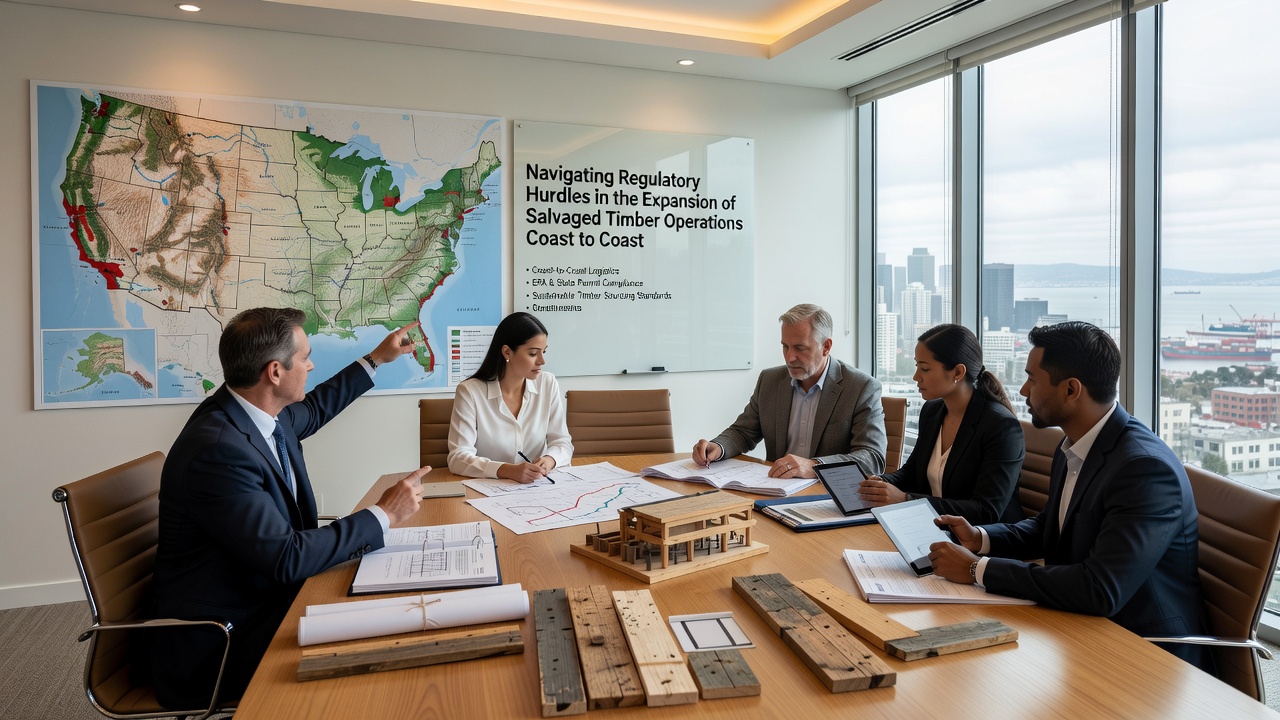
Those who have studied permitting timelines across ten states report that average approval periods range from 45 days in Oregon to 120 days in New Jersey, depending on the complexity of environmental impact assessments required. Data compiled by university extension services shows that operators who engage early with state environmental agencies complete reviews 30 percent faster than those who submit applications without preliminary consultations.
Certification and Sourcing Verification Requirements
Third-party certification programs such as those administered by the Forest Stewardship Council and Sustainable Forestry Initiative have adapted their chain-of-custody standards to accommodate salvaged materials, yet verification still demands on-site audits and species identification testing. European Union timber regulations, referenced through official EU documentation portals, require due diligence statements for any wood products entering member markets, and U.S. exporters must align their records with those standards when shipments reach overseas buyers. Canadian provincial forestry ministries maintain similar verification databases that operators reference when sourcing materials near the northern border.
One study released by a midwestern land-grant university in 2025 examined 47 salvaged timber projects and found that 62 percent encountered at least one certification-related delay during the sourcing phase. Firms that maintain species databases updated quarterly experience fewer rejections during audit cycles because they can supply laboratory confirmation of wood type and age without additional sampling.
Regional Differences and Emerging Requirements in 2026
West Coast states have begun piloting extended producer responsibility programs that assign tracking responsibilities to the original building owners during deconstruction, while East Coast jurisdictions continue to emphasize local zoning variances for processing yards located near residential areas. In October 2026 several western states plan to implement updated hazardous material screening thresholds for salvaged wood treated before 1978, which will require additional laboratory analysis before materials can enter the supply chain. Industry reports from regional trade associations indicate that companies already investing in portable X-ray fluorescence testing equipment have positioned themselves to meet these thresholds with minimal disruption.
Observers tracking policy developments note that coordination between the U.S. Fish and Wildlife Service and state wildlife agencies has increased scrutiny on timber sourced from areas designated as critical habitat, even when the structures themselves are not located on federal land. Operators who map sourcing locations against current habitat layers before bidding on deconstruction contracts report smoother permitting processes overall.
Conclusion
Expansion of salvaged timber operations from coast to coast depends on systematic compliance with overlapping regulatory frameworks that cover transport, environmental protection, historic review, and species verification. Data from multiple agencies and academic sources demonstrates that early engagement with permitting authorities, investment in tracking technology, and alignment with evolving certification standards reduce project delays. As requirements continue to update, particularly those scheduled for October 2026, operators that maintain current documentation practices and regional expertise remain positioned to navigate these hurdles effectively.